Booking choice: The temple and street food walk, from $49 per person. Check dates Tour details
The Jade Buddha Temple (玉佛禅寺, Yufo Chan Si) is a working Chan Buddhist monastery in Putuo, north of Jing'an. It is younger than it looks: the present halls went up between 1918 and 1928. What makes it famous is a pair of white jade statues brought from Burma by a monk from Mount Putuo.
This guide walks you through the halls in the order you meet them, explains which statue is which, and tells the temple's story, including how it survived the Cultural Revolution. Sources: the temple's own pages and Wikipedia.
The quick answer
The seated jade Buddha is 1.95 m tall, weighs about 3 tonnes and sits in the Jade Buddha Hall upstairs at the back (about 10 RMB, no photos). The reclining jade Buddha is only 96 cm long and lies in the Reclining Buddha Hall. The 4-metre white reclining Buddha beside it is a later gift from Singapore and is not the original jade one.
Why is it called the Jade Buddha Temple?
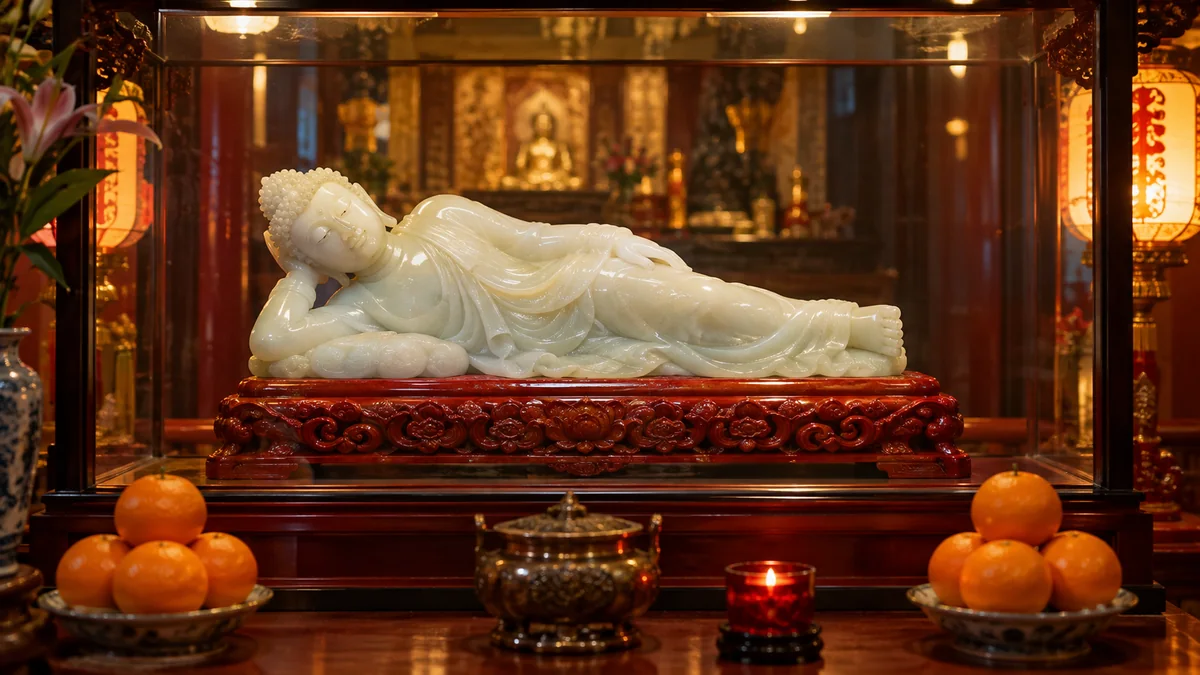
Because of two white jade Buddhas the monk Huigen brought by sea from Burma in 1882. The temple was founded to house them.
Huigen, a monk from Mount Putuo, travelled to Burma (now Myanmar) and was given five jade Buddhas by an overseas Chinese donor, Chen Junpu. On the way home he left two in Shanghai, and a small temple was built for them in Jiangwan. It was damaged in the upheaval at the end of the Qing dynasty. The monk Kechen then raised the present temple on Anyuan Road between 1918 and 1928, on land donated by the Qing official Sheng Xuanhuai (Wikipedia).
Its formal name is Yufo Chan Si, the Jade Buddha Chan (Zen) Temple, of the Linji school. In 2019 the city counted about 1.2 million visitors a year, a third of them from abroad.
How big is the seated jade Buddha, and where is it?
It is 1.95 m tall and weighs about 3 tonnes, carved from one block of white jade. It sits on the upper floor of the Jade Buddha Hall at the back of the temple.
The Buddha sits cross-legged in meditation, with gems set into the robe and the crown, and gold leaf on the jade. It is the temple's treasure, and it is treated that way: you pay about 10 RMB at the hall, climb the stairs, and photos are not allowed. Guards do ask people to put phones away.
Plan two or three minutes with it, not twenty. The room is small and the queue keeps moving on busy days. Early morning is the time for a long look.
Is the big reclining Buddha made of jade?
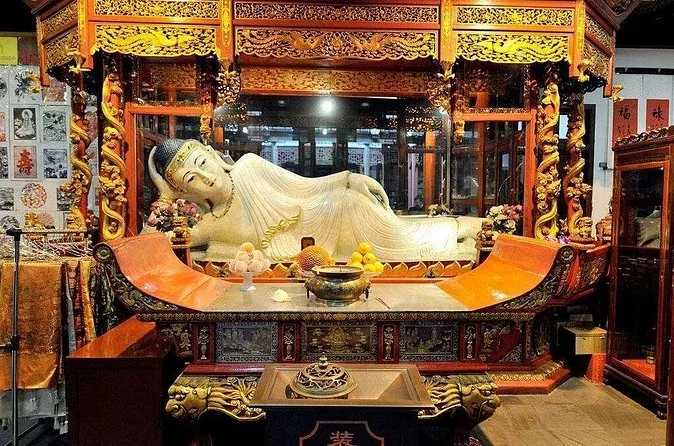
No. The 4-metre white reclining Buddha is carved from alabaster (often called marble) and came from Singapore. The jade one is the small 96 cm statue in the same hall.
The temple's page on the Reclining Buddha Hall describes both. The small one was carved from a single piece of Burmese jade and lies in the auspicious pose: right arm under the head, left hand on the thigh, the moment the Buddha enters nirvana. The large one was brought from Singapore by the temple's tenth abbot, Zhen Chan, and was given in the late 1980s.
Most photos online labelled "the jade reclining Buddha" show the big one. Look for the glass case.
Two hours in the temple, not forty minutes: incense, sutra copying, and an architect who knows the halls.
Check dates for the temple and street food walkWhat are the halls of the Jade Buddha Temple, in order?
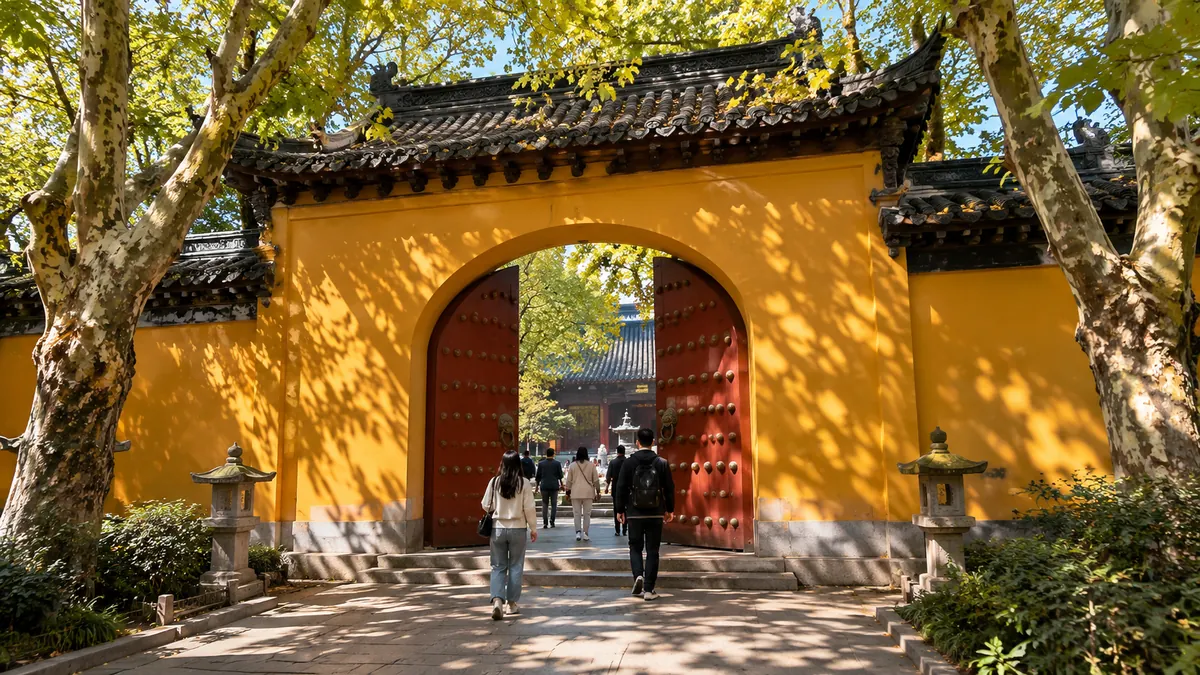
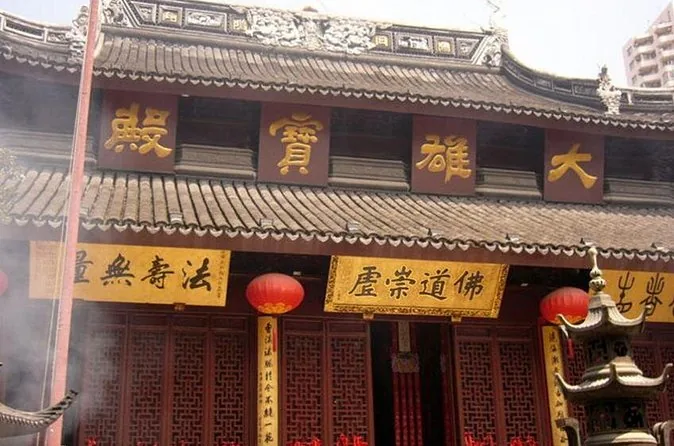
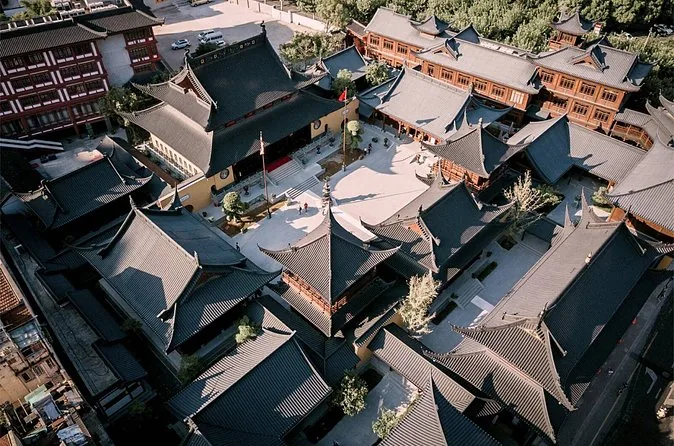
You walk a straight line from the Heavenly Kings Hall at the gate, through the Grand Hall, to the Jade Buddha Hall at the back, with side halls off the courtyards.
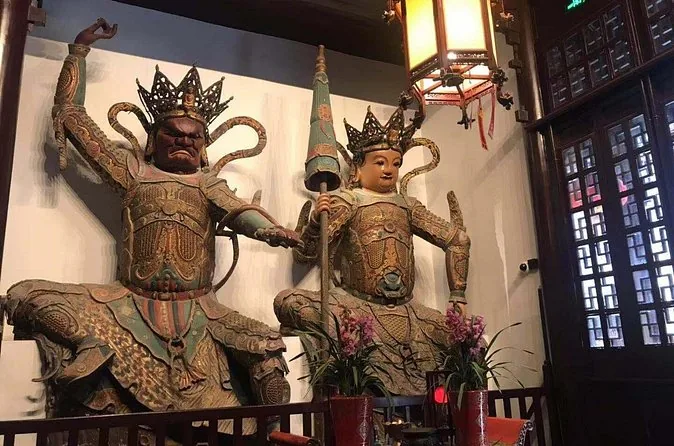
- The Heavenly Kings Hall: the laughing Maitreya facing the gate, the four Heavenly Kings guarding the corners, and Weituo, protector of the Dharma, looking back towards the Grand Hall.
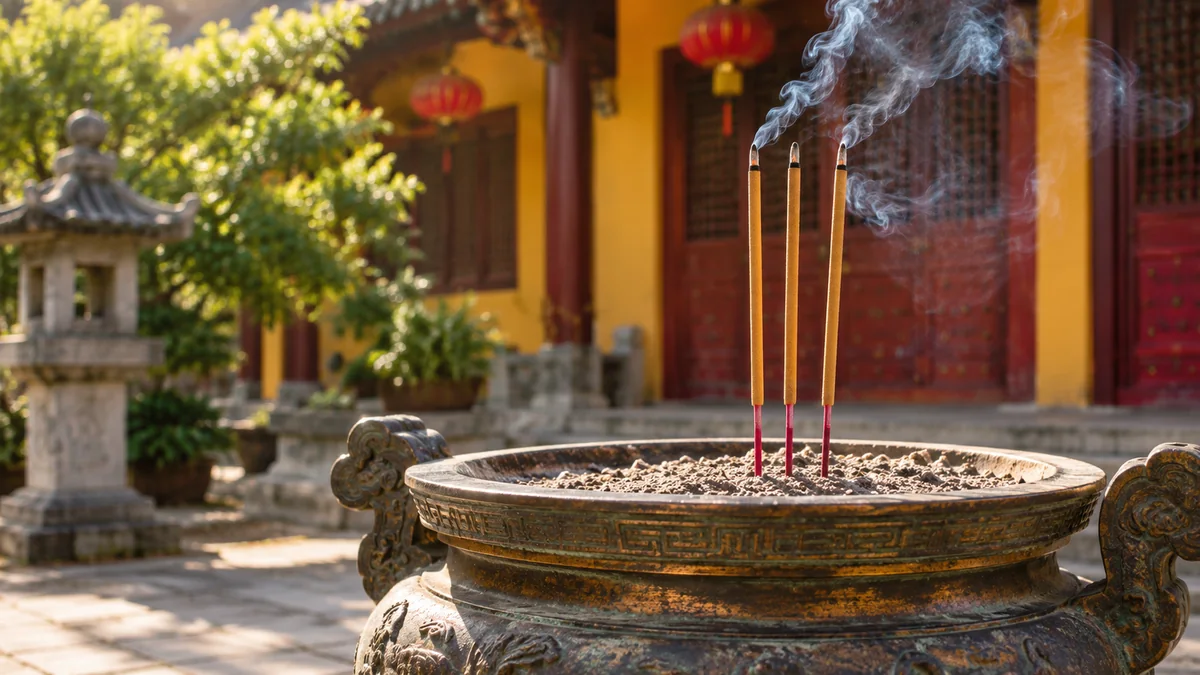
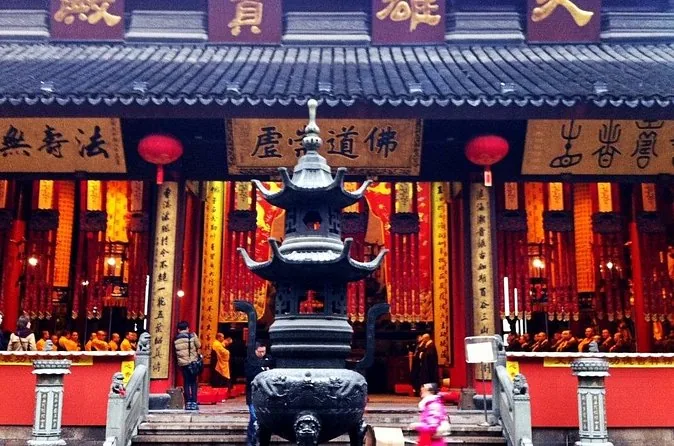
- The first courtyard: the big bronze incense burner and the bell and drum towers.
- The Grand Hall (Mahavira Hall): three golden Buddhas, 20 devas and 18 arhats along the walls, and Guanyin on the back wall. Ceremonies happen here.
- The side halls: the Reclining Buddha Hall, plus halls for Guanyin, Manjushri, the Medicine Buddha, Samantabhadra and Ksitigarbha; the temple lists twelve halls in all.
- The Jade Buddha Hall: the seated jade Buddha upstairs; pay at the hall.
Walk the courtyards clockwise. What to wear and how to behave in each hall is in the etiquette guide.
How did the Jade Buddha Temple survive the Cultural Revolution?
In 1966 the monks pasted portraits of Mao Zedong over the outside walls. The Red Guards would not tear down Mao, and the temple was spared.
The story is told by guides and recorded on Wikipedia. Religious life stopped for years. It returned in the early 1980s: the Shanghai Institute of Buddhism was set up at the temple in 1983, and the monastery is now one of the busiest in the city, and a protective restoration programme began in 2014.
An earlier chapter: the reformist monk Taixu, one of the most influential Chinese Buddhists of the 20th century, died here in 1947.
Can you copy sutras or join the chanting?
Yes. Sutra copying is free, from 9:00 to 15:00, after registering by QR code. Chanting in the Grand Hall is open to watch quietly.
Copying takes 1.5 to 2.5 hours (eastchinatrip, 2026), so plan for it rather than squeezing it in. You trace the characters of a short sutra with a brush or pen; nobody expects you to read them.
The temple and street food walk builds this in: two hours in the temple with incense and sutra copying, and the 4 p.m. chanting if it is on that day. Then it walks you to the street food at Hongshoufang nearby.
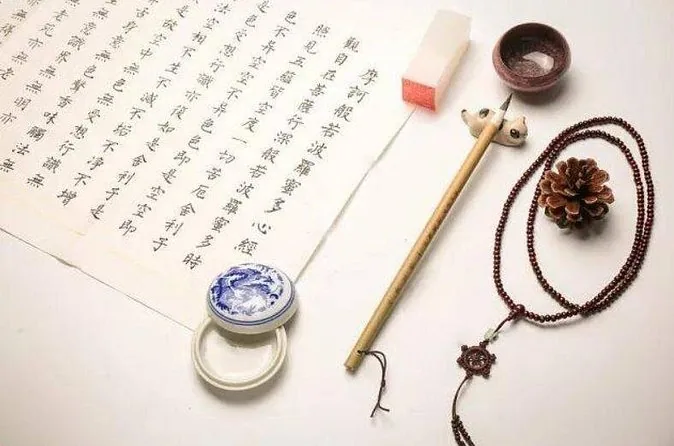
Two hours in the temple with an architect-guide, incense and sutra copying, then street food nearby. Six guests at most.
Explore the temple and street food walk Tour detailsWhere is the vegetarian restaurant at the Jade Buddha Temple?
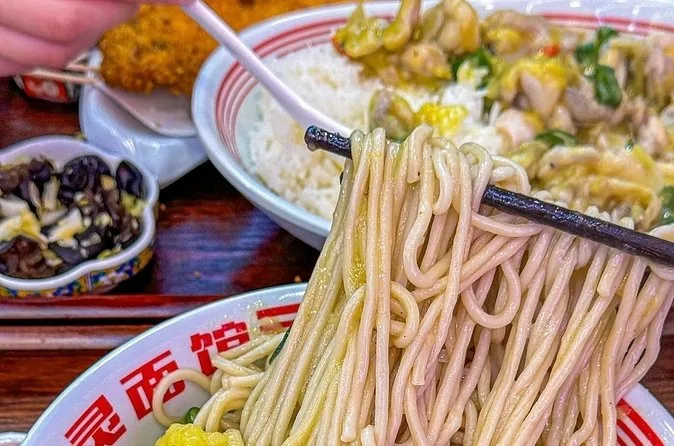
By the exit, with its own street entrance. Bowls of noodles cost about 38 RMB in 2026; it is busiest from 11:30 to 13:00.
The temple has run a vegetarian kitchen for decades, and its official site still advertises it. The noodle hall is simple: order at the counter, then take your tray to a shared table. Arhat noodles and double-mushroom noodles are the ones people come back for. Around the Mid-Autumn Festival, look for the vegetarian mooncakes.
Old guidebooks quote 5 RMB a bowl. That was a long time ago.
How long does it take to see everything?
About an hour for the halls and both jade Buddhas. Two hours with lunch or a slow walk; three or more if you copy a sutra.
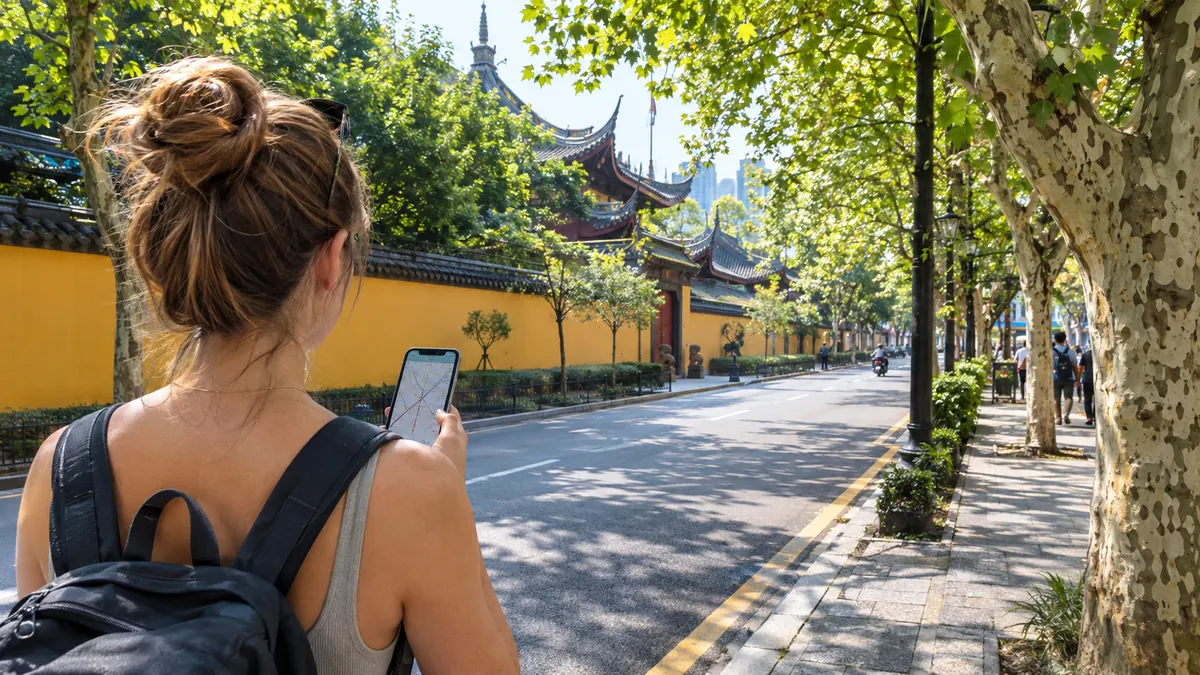
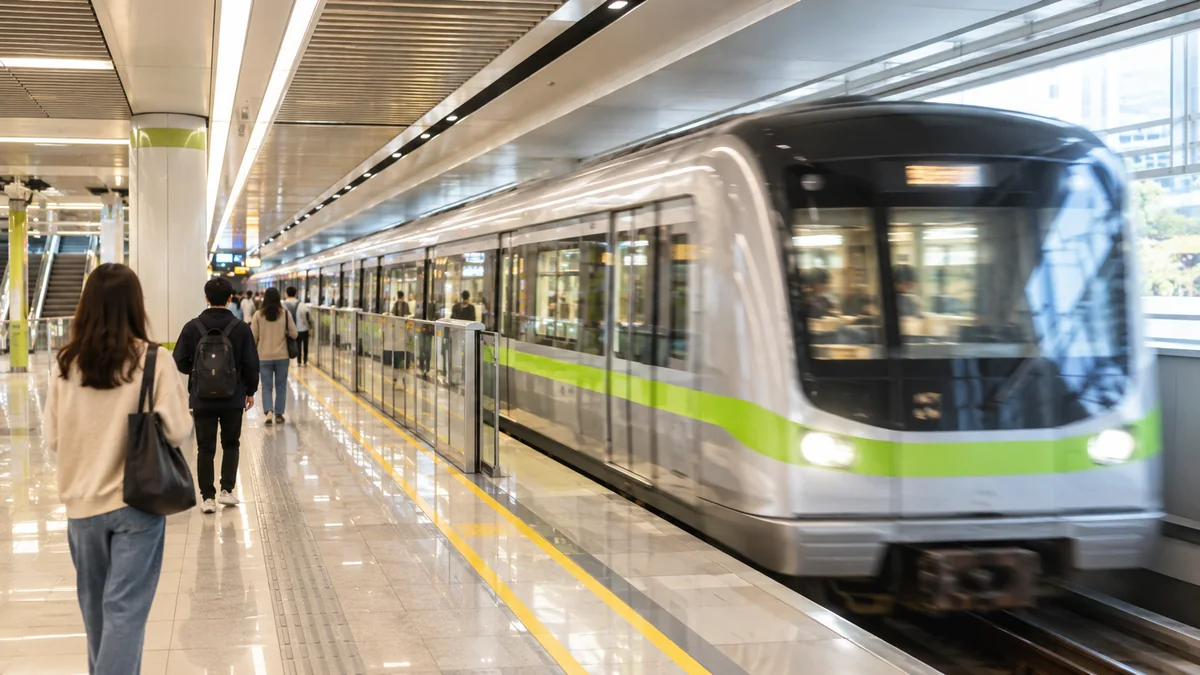
Tours give the temple 40 to 60 minutes, and that covers the essentials. If you are going alone, arrive at 08:00, see the Jade Buddha Hall first while it is quiet, then work back through the side halls. How to get there is in getting to the temple.
Your own guide for about 50 minutes among the halls, then the Old Town lanes.
Check dates for the private temple and Old Town tourFrequently asked questions
Can you take photos of the jade Buddha?
Not of the seated jade Buddha: photos are banned in the Jade Buddha Hall. The courtyards and most other halls are fine unless a sign at the door says otherwise.
Which jade Buddha is bigger?
The seated one, 1.95 m tall and about 3 tonnes. The reclining jade Buddha is 96 cm long. The large reclining statue is alabaster from Singapore.
When was the Jade Buddha Temple built?
It was founded in 1882 to house the jade Buddhas; the present temple on Anyuan Road was built between 1918 and 1928.
Is the Jade Buddha Temple still a working monastery?
Yes. Monks live there, ceremonies are held daily, and the Shanghai Institute of Buddhism has been based there since 1983.
Ready to book
Choose your tour
Free cancellation up to 24 hours before on every option. Prices are from-prices in USD and move with the season.
Jade Buddha Temple & Street Food Walk
Two hours in the temple with an architect, then street snacks
Jade Buddha Temple & Old Town Private Tour
- Private English-speaking guide
- Pickup and drop-off in downtown Shanghai
- Didi rides for 1 to 4 guests, a minivan for 5 or more
Jade Buddha Temple, Yu Garden & Tea
Temple, classical garden and a tea ceremony, privately